


Understanding Alspire Process
Dive into the pivotal role of data analytics in crafting marketing campaigns that resonate with target audiences. Explore how data-driven insights fuel strategic decision-making, allowing marketers to identify consumer preferences, behaviors, and trends.
- By harnessing the power of data analytics, marketers gain valuable insights into campaign performance
- Enabling them to optimize strategies for maximum impact and ROI.
- Discover how data analytics enables personalized marketing approaches, delivering tailored messages to the right audience segments at the right time.
Understanding Consumer Behavior
Data analytics is revolutionizing the way marketers understand consumer behavior in today's digital age. By harnessing the power of data collected from diverse sources such as social media, website interactions, and purchasing patterns, marketers can unlock valuable insights into their target audience.
.avif)
Personalization is a key benefit of data analytics in marketing. By understanding the unique preferences and behaviors of different consumer segments, marketers can create highly targeted and personalized campaigns. For example, they can send customized email newsletters to specific segments of their audience based on their past interactions with the brand or showcase products related to their recent searches or purchases. This level of personalization not only enhances the customer experience but also increases the likelihood of conversion and customer loyalty.
Optimizing Campaign Performance
Data analytics empowers marketers to make informed, real-time decisions. With insights from data analysis, they pivot strategies, allocate resources effectively, and optimize campaigns for maximum ROI. This agility enables marketers to drive tangible results, efficiently achieving business objectives in the ever-evolving digital landscape.
Predictive Analytics
Predictive analytics stands as a potent tool in marketing, leveraging historical data and patterns to forecast future trends and behaviors. This capability enables marketers to anticipate customer needs and preferences before they manifest, fostering proactive adjustments to strategies. By staying ahead of the curve, marketers can capitalize on emerging opportunities and preemptively address potential risks.
“Proin sed libero enim sed faucibus turpis in. Nisi est sit amet facilisis. Venenatis cras sed felis eget velit. A erat nam at lectus urna duis”
This proactive approach not only enhances agility but also boosts competitiveness in dynamic market landscapes. Armed with predictive insights, marketers can refine their targeting, messaging, and offerings to align seamlessly with evolving consumer expectations. Ultimately, predictive analytics empowers marketers to optimize resource allocation, maximize ROI, and maintain a strategic edge in the ever-evolving realm of marketing.
Together, all these elements create the unique “voice” of your writing—the vibe that readers pick up on almost without realizing it.
However, Nielsen Norman Group (NN/g) came up with a clear and simple way to figure out the tone a text can have. They broke it down into four key dimensions that help you spot the vibe:
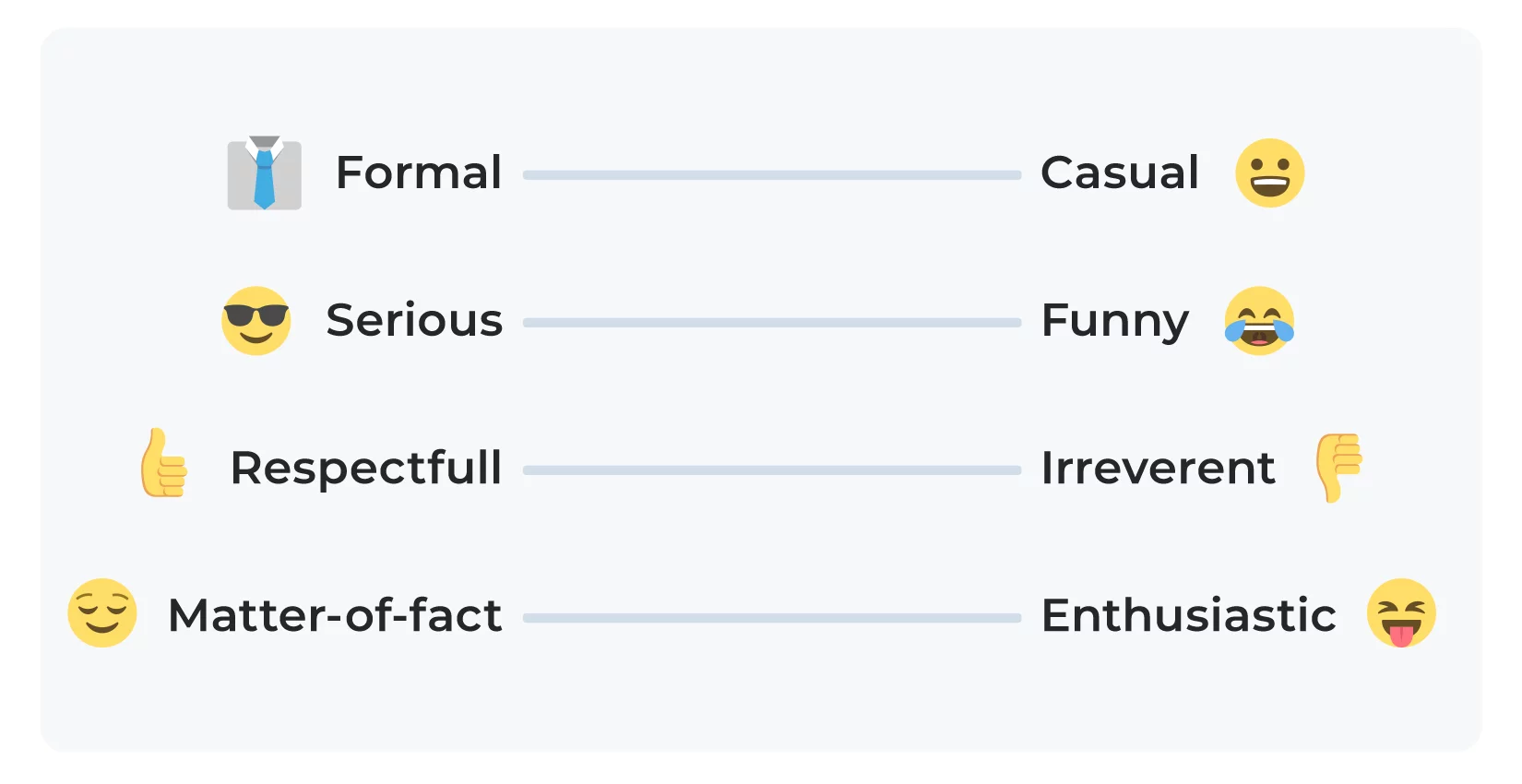
Each of these four dimensions is a scale. Your text can land anywhere on that scale—closer to one end, the other, or somewhere right in the middle. That means every message has its own unique “shade.” Putting it all together, you can think of a text’s tone as a point in a four-dimensional space. This way of looking at it helps brands and writers speak the same language as their readers.
Below, you’ll see how the same idea can sound totally different depending on the tone. We picked a simple example and showed how it changes depending on where it falls on each of the four NN/g scales.
Formal—Casual
Does the text sound like a business email or a message to a friend? Informal doesn’t always mean slangy, but it usually feels more relaxed and closer to everyday speech.
FormalCasualDear colleague, please submit the report by the end of the day. Thank you in advance.Hey! Don’t forget to shoot over the report today, okay? 😉Tone of voice variation across the NN/g scale: Formal vs Casual
Serious—Funny
Is the author trying to crack a joke, or are they keeping things straight and serious?